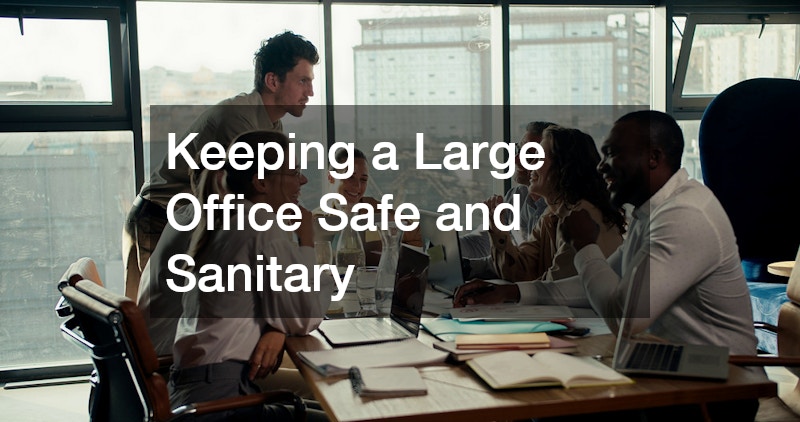
Managing a sprawling corporate office campus or a high-rise commercial headquarters is akin to overseeing a small, self-contained city. On any given workday, a massive office building serves as a complex ecosystem in which thousands of human variables, structural components, and high-voltage electrical networks continuously interact. Employees expect a safe, healthy, and secure workspace, while corporate stakeholders need reliable operations, low liability, and the long-term preservation of the physical real estate asset. In an environment of this scale, facility management can never be reactive. A minor maintenance gap, such as a slow-moving drain, a flickering server-room breaker, or a lapse in daily sanitation, does not merely cause a temporary inconvenience; it can rapidly cascade into a systemic operational failure, a costly regulatory penalty, or a widespread public health issue that halts productivity.
To successfully insulate an enterprise-scale office from these interlocking risks, operations directors must abandon old-fashioned, patchwork maintenance habits. True facility resilience requires a comprehensive, dual-horizon management framework. This framework pairs high-frequency indoor biological sanitation protocols with a rigorous, predictive structural maintenance schedule for the building’s exterior envelope and primary mechanical utilities. When every layer of the corporate property, from the rooftop solar arrays down to the high-traffic basement lobby, is monitored and maintained with technical precision, the workplace transforms into a safe, sanitary, and highly efficient engine that actively supports corporate growth.
Securing the Perimeter and Hardening Physical Building Logistics
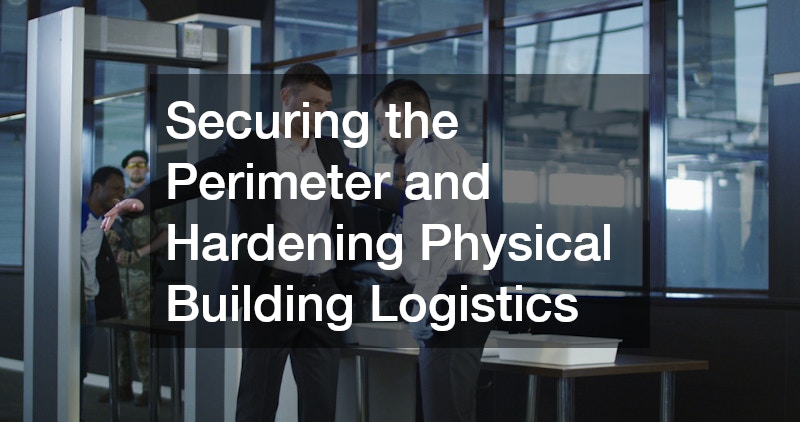
Securing a large corporate office requires a multi-layered approach to physical defense that begins at the outer boundary lines of the property and moves systematically inward toward the sensitive interior core. High-density corporate workplaces are prime targets for physical breaches, property theft, and corporate espionage, meaning that access control must be strictly managed without creating frustrating bottlenecks for arriving employees. Implementing automated entry infrastructure, such as biometric scanners, high-frequency RFID gates, and encrypted smart-badge readers, allows security personnel to smoothly segregate public visitor zones from semi-private employee spaces and highly secure server environments.
A critical pillar of this defensive posture is the deployment of an optimized, commercial-grade visual surveillance network that leaves absolutely zero blind spots across the facility’s exterior layout. When designing these networks, special emphasis must be placed on tracking high-vulnerability logistics zones, such as delivery loading docks, underground parking garages, and remote pedestrian entry doors. Modern corporate security teams rely on specialized technical firms to execute comprehensive security camera installations that feature remote, AI-driven video analytics.
- Establish distinct, role-based access levels within the building’s master security database to strictly limit entry into critical utility hubs and data rooms.
- Conduct quarterly diagnostic tests on all automated locking systems, emergency exit door crashes, and perimeter gate intercom units to ensure flawless operation.
- Integrate high-definition license plate recognition cameras at all parking garage entrances and exit lanes to track vehicle logs automatically.
As corporate facilities continue to scale their operational footprints, hardening physical security goes hand in hand with transitioning to sustainable, self-sufficient energy infrastructures. Large-scale office buildings feature expansive, unshaded roof footprints that are perfectly suited for hosting high-yield renewable energy networks. Investing in a commercial solar panel network allows enterprise facilities to drastically lower their reliance on the municipal power grid, reduce monthly operational expenditures, and secure a reliable source of backup power during regional blackouts.
Fortifying Macro Structural Infrastructure Against Climate Stress
The exterior envelope of an enterprise-scale office building is under a constant, unyielding attack from the elements. Severe wind loads, intense ultraviolet radiation, thermal temperature swings, and torrential rainfall work continuously to find minor vulnerabilities in the building’s outer defenses. If water or moisture manages to penetrate the exterior shell, it can quietly rot structural steel beams, destroy expensive ceiling finishes, short-circuit electrical risers, and spark toxic mold outbreaks inside the hidden plenum spaces above office desks. Therefore, fortifying the upper building envelope must be treated as a primary maintenance priority by any proactive facility director.
Flat or low-slope corporate roofs constructed from TPO, EPDM, or modified bitumen membranes require a rigid, predictive inspection schedule to identify micro-tears and seam degradation before a major leak occurs. Managing these massive structural expansions requires partnering with elite providers who specialize in heavy-duty commercial roofing solutions. These specialized teams utilize advanced aerial drone photography and localized thermal imaging to detect hidden moisture pockets beneath the roof membrane that are completely invisible to the naked eye. Relying on highly rated roofing companies ensures that your structural inspections, emergency patching protocols, and long-term warranty compliance are managed with the exact level of engineering precision required to protect a multi-million-dollar corporate asset from sudden climate failures.
- Execute comprehensive structural visual roof inspections at least twice a year, specifically following the transition into severe winter and summer seasons.
- Check all rooftop expansion joints and flashings around HVAC curbs to verify that thermal movement has not cracked the water-resistant seals.
- Keep all high-altitude equipment access hatches, safety parapet walls, and protective walkway pads clear of debris and structurally secure for maintenance teams.
A successful exterior structural defense requires looking beyond the flat surface of the roof membrane to analyze how the entire building handles extreme hydraulic loads during sudden, climate-driven storm events. When hundreds of thousands of gallons of rainwater fall across a large office building in a short period, the building’s drainage infrastructure must capture, route, and discharge that water away from the property with absolute efficiency. Failure to manage this massive water diversion can lead to catastrophic pooling on upper walks, cascading water damage along the structural facade, and severe soil erosion around the building’s foundation footings, which can permanently compromise the structural stability of the entire corporate complex.
Engineering High-Volume Stormwater Defenses and Electrical Safety Networks
To successfully mitigate the threat of water intrusion and foundation decay during major storm events, a facility must deploy heavy-duty, engineered water-management systems that are seamlessly integrated into the building’s primary architectural envelope. Standard residential gutters are completely inadequate for handling the sheer volume of water generated by a multi-acre office roof footprint. Instead, facilities must invest in heavy-gauge aluminum or stainless steel commercial gutters that feature custom-engineered downspout collections and heavy-duty debris screening frameworks. These heavy-volume channel systems must be cleared of organic debris and checked for structural alignment regularly, ensuring that stormwater is swiftly drawn away from the upper building lines and channeled into municipal storm lines without overflowing onto the building’s concrete facade.
While managing external water vectors is critical for preserving structural integrity, managing the internal electrical infrastructure is equally paramount for securing human life and corporate data systems. A large-scale office building houses an incredibly dense, complex electrical network composed of high-voltage transformers, localized distribution sub-panels, emergency backup diesel generators, and vast Uninterruptible Power Supply banks. This massive grid is under continuous stress from running high-capacity HVAC chillers, server farms, and thousands of personal workstations simultaneously. To prevent catastrophic fire hazards and unexpected power drops, you must retain a certified commercial electrical contractor to execute routine, predictive load-testing and infrared thermal scans of all electrical closets.
- Utilize advanced infrared thermography to identify hidden electrical resistance and overheating breakers before they fail and spark an industrial fire.
- Establish a definitive, routine testing schedule for all emergency backup generator systems, verifying that automated transfer switches engage within milliseconds of a power failure.
- Install high-capacity, surge-suppression networks at the main electrical service entrance to shield sensitive corporate computer equipment from external lightning strikes.
Allowing a certified commercial electrical contractor to systematically audit your high-voltage distribution networks ensures that your entire corporate campus remains in absolute alignment with the National Electrical Code and local fire safety ordinances. These thorough, data-driven inspections catch micro-corrosion on grounding copper wires, imbalanced electrical phases, and worn insulating wrappers long before they can manifest as a dangerous workplace hazard or disrupt your daily corporate workflow. By matching your heavy external stormwater defenses with an uncompromising, professional electrical safety program, you secure your physical workspace from both the unpredictable forces of nature and the internal strains of heavy industrial power consumption.
Eliminating High-Density Biological Risks in Shared Utility Zones
The interior of a large corporate office contains specific, high-density utility zones that present elevated biological and safety risks due to the sheer volume of human interaction and shared physical infrastructure. Chief among these zones is the corporate culinary center or high-volume employee cafeteria. These industrial kitchen environments process raw ingredients, operate high-heat cooking equipment, and handle massive amounts of organic waste every single day. If sanitation protocols are allowed to slip even slightly in these zones, the facility becomes a breeding ground for harmful foodborne pathogens, severe cross-contamination, and structural grease-fire hazards that threaten the health of your entire workforce.
Maintaining compliance with strict local health department mandates requires implementing an unyielding, professional commercial kitchen cleaning schedule that goes far deeper than a surface-level wipe-down. Every operational shift must conclude with a comprehensive sanitization of all food-contact surfaces using EPA-registered biocides, followed by a deep clearing of under-counter storage bays, line-cook prep lines, and floor drainage systems. Furthermore, industrial exhaust hoods, grease traps, and deep ventilation shafts must be cleaned regularly by certified specialists to eliminate the accumulation of vaporized cooking oils.
- Pump and clean all interior and exterior grease interceptors at mandatory intervals to prevent toxic wastewater backups into the main building drains.
- Enforce a strict, color-coded microfiber cloth and tool system within the culinary zone to completely eliminate cross-contamination between raw prep and clean serving areas.
- Execute daily high-temperature wash cycles on all industrial dishwashing machinery, verifying that final rinse temperatures reach food-safety sterilization codes.
While managing the intense biological and fire risks inside the culinary zone is vital, facility directors must simultaneously maintain the delicate electrical infrastructure that powers adjacent office common areas and data distribution closets. High-volume kitchens and adjacent breakrooms house a dense concentration of appliances, lighting ballasts, and water filtration pumps that can easily trigger localized power surges or short circuits. To resolve these unexpected electrical failures without disrupting corporate operations, facilities must have immediate access to a trusted emergency electrician service. Sourcing a responsive, certified electrician service ensures that if a critical circuit breaker trips, a localized wiring harness shorts out, or a backup power link fails, the issue is safely diagnosed and repaired using code-compliant materials.
Scaling Indoor Sanitation Frameworks Across Expansive Footprints
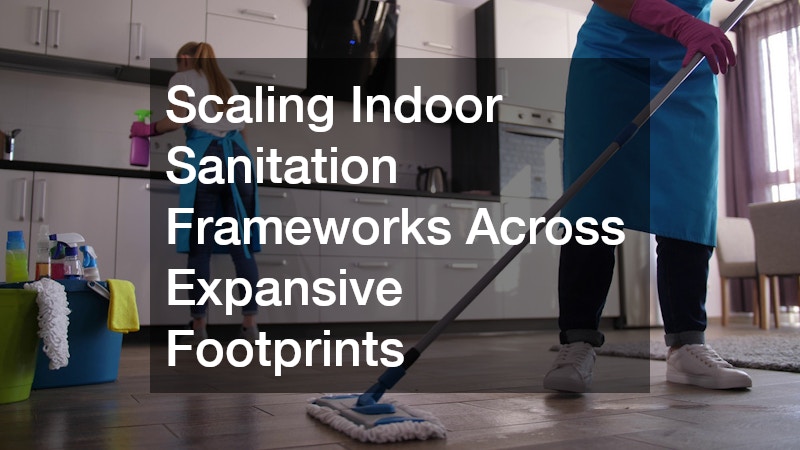
Maintaining a high level of cleanliness across an open-office footprint that spans multiple floors and hosts thousands of individual workers requires a highly organized, scalable logistics strategy. High-touch communal surfaces, such as elevator buttons, stairwell handrails, conference room tables, and public restroom fixtures, serve as primary vectors for the rapid transmission of viral and bacterial micro-pathogens through a corporate workforce. To break these chains of infection, facility managers must design an optimized “day-porter” rotation system that continuously deploys vetted commercial cleaners throughout peak operational hours. These professional teams must be armed with hospital-grade, low-VOC disinfectants that eliminate pathogens on contact without introducing harmful chemical fumes into the indoor air supply.
- Map out your facility into distinct, high-traffic zones to establish predictable, hourly cleaning frequencies for all public restrooms, elevator cars, and breakroom counters.
- Equip your assigned commercial cleaners with advanced electrostatic sprayers to achieve total, wrap-around chemical disinfection across complex architectural geometries.
- Audit all cleaning supply logs weekly to verify that the on-site sanitation teams are utilizing eco-certified, green chemicals that protect indoor air quality.
Beyond the continuous sanitization of high-touch hard surfaces, an enterprise-scale office cleaning program must execute deep, restorative maintenance on the building’s expansive textile flooring systems. The massive carpeted fields found in modern open-office layouts act as giant, passive environmental air filters, continuously trapping airborne dust, skin dander, track-in outdoor soil, and fine particulate matter deep within their fiber matrices over time. If these carpeted areas are only subjected to basic daily vacuuming, the trapped contaminants will eventually become airborne again through foot-traffic agitation.
To properly remediate these deep textile reservoirs, facilities must partner with a certified commercial carpet cleaning company to execute regular hot-water extraction and low-moisture encapsulation maintenance cycles. A specialized commercial carpet cleaning company possesses the heavy-duty industrial truck-mount systems, customized rotary agitation tools, and specialized polymer encapsulators required to deeply lift embedded oils and fine particulates without soaking the subfloor. This specialized process dramatically improves indoor air safety metrics, removes stubborn tracking stains, and extends the active operational lifespan of your commercial flooring investment by years. By pairing your daily hard-surface disinfection protocols with this deep, structured textile extraction program, you cultivate a beautifully clean, healthy, and highly professional corporate environment.
True long-term facility resilience is achieved only when operations leaders view the physical building as a fully integrated network that requires continuous, predictive maintenance across all internal and external fronts. By taking definitive command of your physical property lines, from implementing advanced, AI-driven perimeter video surveillance and high-yield rooftop solar arrays to establishing strict, hospital-grade kitchen sanitization cycles and deep textile extraction calendars, you completely insulate your enterprise from operational downtime. Treat your corporate infrastructure with the meticulous engineering care it demands, and establish a dedicated network of certified contractors and elite specialized technicians who will forcefully protect your corporate workforce, preserve your physical real estate assets, and secure your corporate bottom line for decades to come.